
Is Social Media Really Addictive…Or Are We Asking the Wrong Question?
Let’s be honest, we have all heard the phrases: my child is addicted to their phone, they can’t put it down, it’s like a drug. In the heat of a power struggle over a screen, those words land with the force of certainty. It inevitably comes up by a concerned parent at each of my conferences. But as I dove into the research around addiction in relation to social media I decided there’s a bigger question worth asking: is this truly addiction, or are we looking at something else entirely? The answer matters, not just for how we talk about it, but for how we respond as parents, educators, and professionals who want to support teens to grow with technology . Safely, confidently, and with humanity intact.
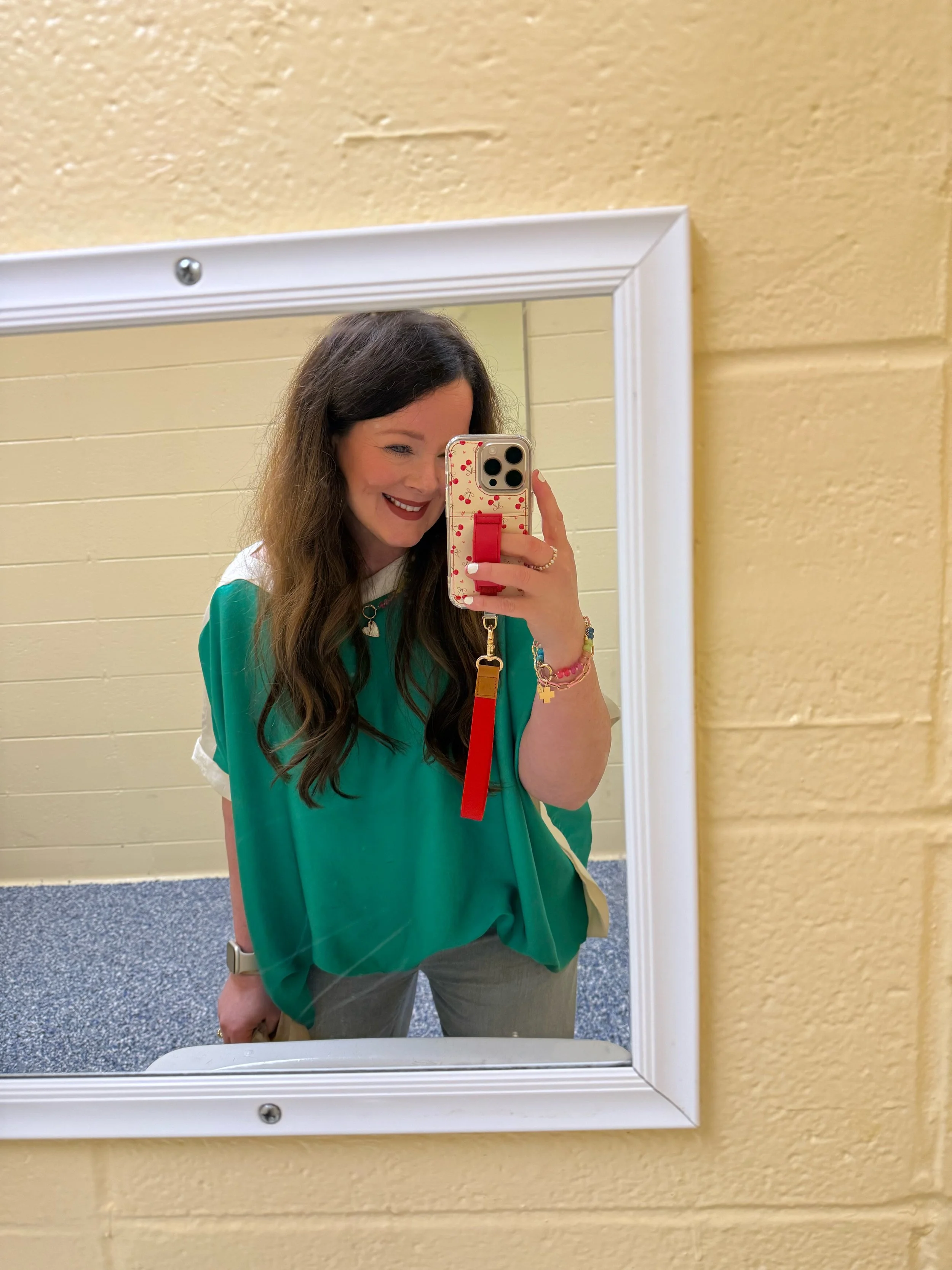
The Mirror Was Small. The Truth Was Not.
I forget how little they are. Elementary school age kids. They are babies. Tiny. Maybe it is because my crew…well they are grown. Big, large, grown adult humans. At almost 19 and 21 they tower over me. You would think I would remember how little these guys are given how frequently I speak to elementary school students. And it is not always their size…yet different “things” that remind me of how small they are. This week it was the tiny bathroom mirror. The one that, at 5’1, I had to bend over to see into. It was the little first graders at recess playing the “parachute game”. Their little bodies struggling to get the parachute up together, then struggling again to bring it down trapping air to make a little “mountain”. Many of them standing while others were sitting. Laughing. Wiggling. Bodies constantly in motion. Just trying to figure it all out. As they should be. And while I largely do not speak to first and second grade, even my third graders always seem little. Because…they are.

A Soft Digital Detox: How to make Summer a Little less about screens and more about in person connections
Let them be bored. They can be bored outside in the heat or they can be bored inside in the air conditioning but boundaries and guidelines will state that they cannot bother you. They also cannot consistently bother you, hoping you will find something for them to do. Explain that you have your own day to navigate, and that you are not their activities director.

The In Between
Technology created and has encouraged a world of now. AI has quickly closed any gaps that were left. Sure it can remove the mundane tasks and disguise the application as efficiency. We want to be faster. Better. Than everyone else. But why? Does faster actually make us better? At what point did sitting in the uncomfortable places of the in between become such a negative space? One could argue it is that friction that we feel, the “rub” of the in between of having to read, research, quietly think…that it is in this space that we build incredibly resilient, empathetic, connected humans.